Short answer: it depends on the location. Boston Pizza is a franchise chain, and each franchisee decides their own meat suppliers — so some Boston Pizza locations in Canada serve halal meat options while most do not. There is no chain-wide halal certification.
That single fact is the most important thing on this page. If anyone tells you “Boston Pizza is halal” or “Boston Pizza is not halal” as a blanket statement about Canada, they’re wrong — the answer is genuinely location-by-location. This guide explains why it varies, how to find out at your local Boston Pizza, what to ask the staff, and which menu items are your safest bets.
How We Verified This (Methodology Note)
Boston Pizza International Inc. is a franchisor — it sets the brand, the menu, and the marketing, but each restaurant is owned and operated by an independent franchisee. That means meat sourcing is a franchisee-level decision, not a national policy. A franchisee in Scarborough may source from a halal-certified supplier because their customer base asks for it; a franchisee in a smaller market may not.
What this means for you:
- Policies change. A location that served halal chicken last year may have switched suppliers, and vice versa. Always re-verify.
- There is no official chain-wide halal menu or certification page on bostonpizza.com as of 2026. The absence of a national policy is itself the policy.
- Directory listings are crowd-sourced. Sites like zabihah.com (a halal restaurant directory) list some Boston Pizza locations reported by diners — useful as a starting point, not as proof.
Disclaimer: This guide is editorial research, not religious guidance and not an endorsement. Halal standards differ between diners — some require hand-slaughtered (zabihah) certification, others accept machine slaughter from certified suppliers. Confirm the details that matter to you directly with the restaurant.
What “Halal” Actually Depends on at a Boston Pizza
1. The franchisee’s supplier
Halal status is entirely a supplier question. Boston Pizza’s corporate menu doesn’t dictate whether the chicken, beef, or pepperoni comes from a halal-certified source — the individual restaurant’s purchasing does. Locations in areas with larger Muslim communities (parts of the GTA, Mississauga, Surrey, parts of Montreal) are more likely to have sourced halal meat at some point, because the demand is there.
2. Certification vs. “halal-friendly”
These are different things, and restaurants sometimes blur the line:
- Halal-certified meat means the supplier is certified by a recognized halal body (common Canadian examples include the Islamic Food and Nutrition Council of Canada, ISNA Canada certification, and HMA-type certifiers).
- “Our chicken is halal” from a server is a claim, not a certification. Ask what it’s based on — the box in the freezer usually carries the certifier’s logo.
- Cross-contamination is the third variable. Even where halal meat is used, shared fryers, grills, and prep surfaces may handle pork products. Some diners are comfortable with this; others aren’t. It’s your call — but you should know to ask.
3. Menu category matters
Boston Pizza’s menu is pizza-heavy, and that actually helps: pizza and pasta dishes are far easier to make halal-friendly than burgers. Cheese pizzas, vegetable-topped pizzas, and meatless pastas avoid the meat question entirely (vegetarian picks are covered below).
How to Find Out If Your Local Boston Pizza Serves Halal
Start with these, in order:
- Check zabihah.com. It’s the best-known halal restaurant directory in North America, and some Boston Pizza locations are listed there by diners. Listings are user-reported and can go stale, so treat a listing as “worth a call,” not as a guarantee. Conversely, the absence of your location on zabihah doesn’t prove anything — many halal-serving spots are never listed.
- Call the restaurant directly — before you visit. Ask for the manager, not the cashier on a busy Friday night. The exact questions to ask are in the next section.
- Check the restaurant’s Google reviews and social posts. Sometimes franchisees advertise halal options on their own location-level social pages or in review responses.
- When you visit, ask to see the supplier packaging. A genuinely halal-serving restaurant will usually have no problem showing you the box label with the certification logo. If staff can’t tell you who supplies their chicken, treat the answer as “no.”
Exact Questions to Ask the Staff
Copy-paste friendly. Ask these in person or by phone, ideally to a manager or the kitchen:
- “Do you serve halal meat here — and which meats specifically?” (Chicken only? Beef? Pepperoni? Often it’s only one or two proteins.)
- “Who is your halal supplier, and are they certified?” (Listen for a named supplier or certifier. “We get it from our regular supplier” is a non-answer.)
- “Is the halal meat prepared separately — separate grill, separate fryer, separate utensils?” (Shared equipment with pork/bacon is the most common deal-breaker for strict diners.)
- “Do the halal options apply to all dishes, or only certain ones?” (A location might have halal chicken for the wings but regular pepperoni on pizzas — protein-by-protein matters.)
- “Is this the same supplier you’ve always used, or did it change recently?” (Franchisees do change suppliers. A location that was halal last year may not be now.)
- “Can I see the certification or the packaging?” (Perfectly reasonable request. Hesitation or refusal is information.)
If the answers are vague — “I think so,” “most of our stuff is halal” — treat it as not confirmed.
Halal-Friendly and Vegetarian Picks on the Menu
These suggestions assume the meat is not confirmed halal at your location. They’re the safest orders for Muslim diners, ranked from safest to “confirm first”:
Safest bets (no meat question at all):
- Cheese pizza — any size, any crust. Dairy + dough, no meat involved. Add your favourite veggie toppings (mushrooms, peppers, onions, tomatoes).
- Vegetarian pizzas — garden veggie and similar builds. Just confirm the menu build doesn’t include a meat-based sauce or garnish you didn’t notice.
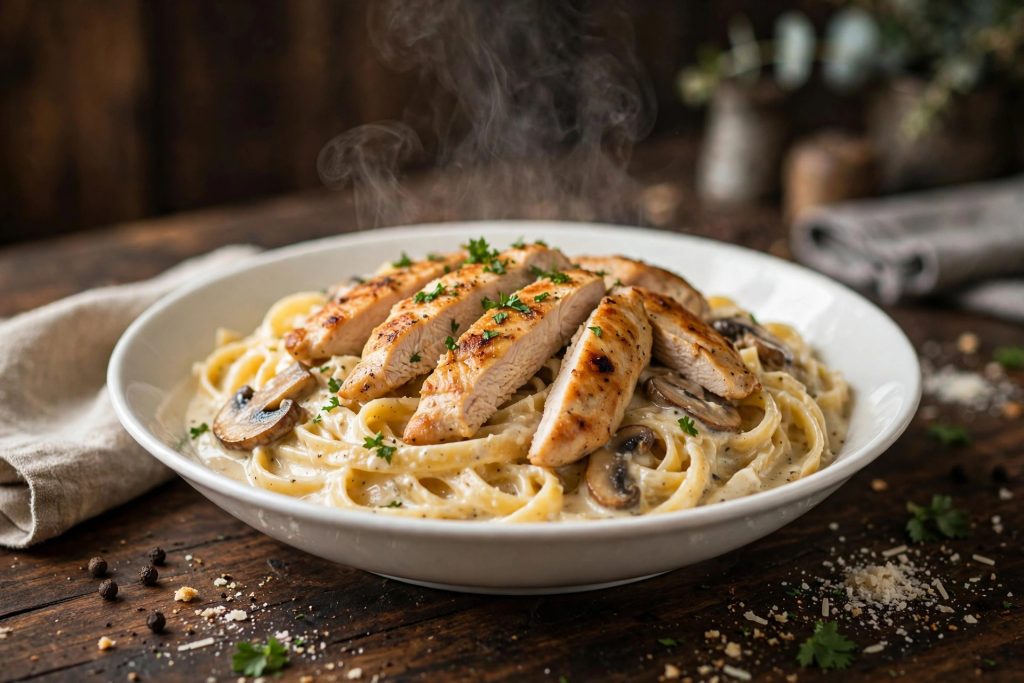
- Vegetarian pastas — cheese or vegetable-based sauces (think cheese tortellini in a cream/rose sauce or veggie spaghetti). Confirm no meat-based broths or bacon bits in the sauce.
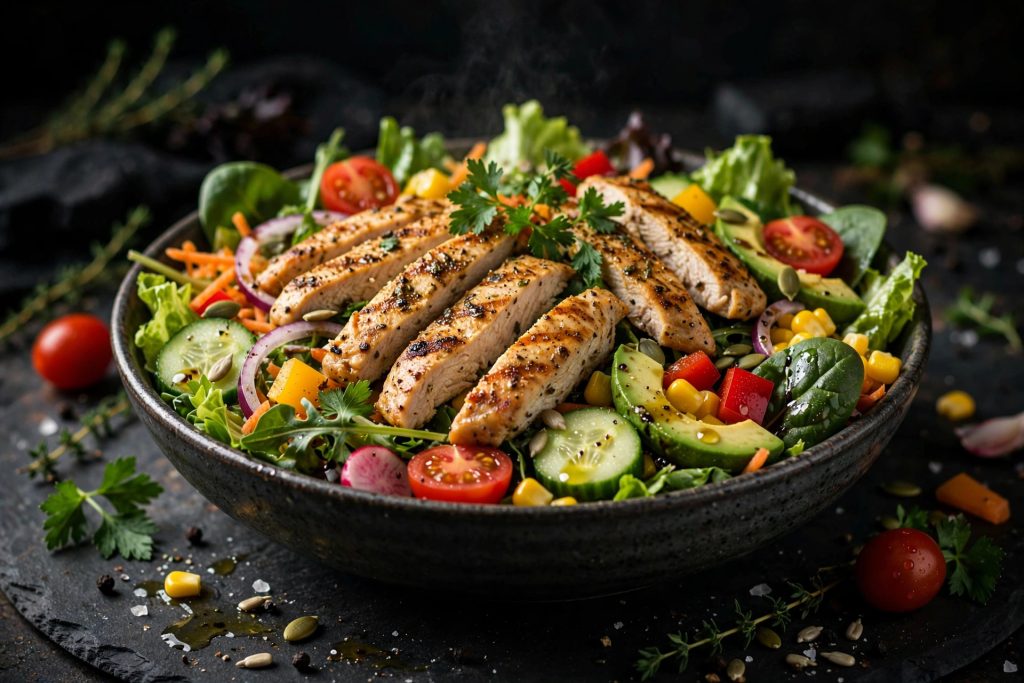
- Salads — straightforward, and easy to customize. Watch for bacon crumble add-ons on certain salads.
Confirm-first (ask the staff):
- Chicken-topped pizzas and pastas — only if the location confirms halal chicken.
- Beef-based items — only if halal beef is confirmed.
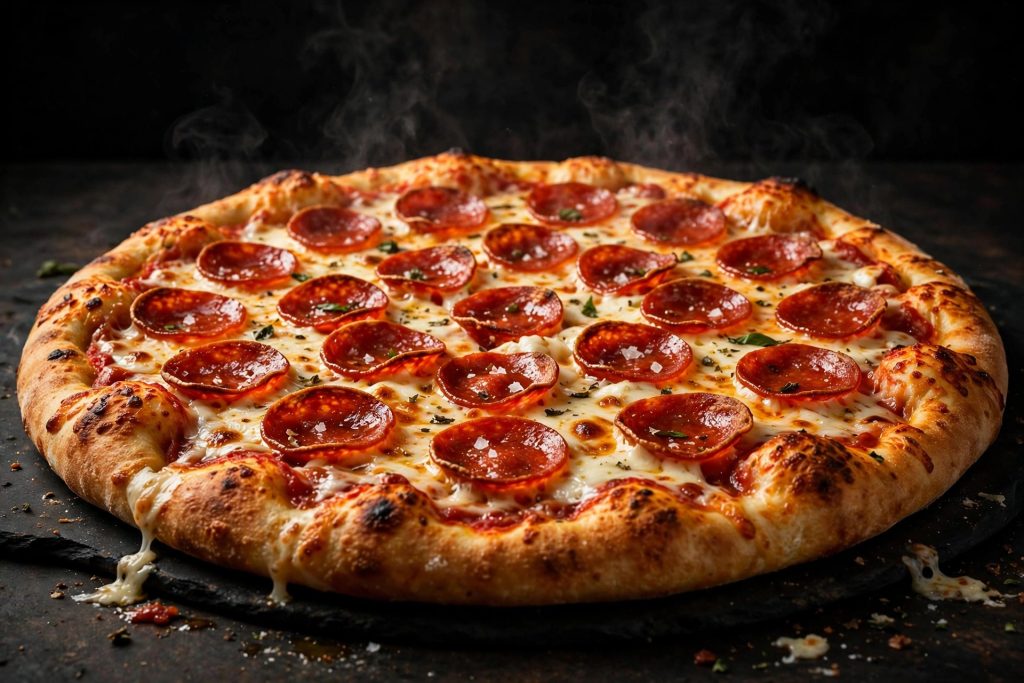
- Pepperoni — at Boston Pizza, pepperoni is typically a pork/beef blend, so it needs confirmation either way. Many Muslim diners skip it by default.
What to skip without confirmation:
- Anything with bacon, sausage, ham, or pepperoni unless the restaurant confirms halal versions specifically (rare).
- Fried items if the fryer is shared with pork products — worth asking about if cross-contamination matters to you.
Note: Menu builds change. This guide describes standard menu categories — always check the current menu at your location before ordering. For current pricing, see our menu category price guides.
Why There’s No National Halal Policy (And Probably Won’t Be)
Boston Pizza operates on a franchise model with roughly 370+ locations across Canada. National halal certification would require every franchisee to source from halal-certified suppliers, change prep processes chain-wide, and maintain certification — a significant operational cost with uneven customer demand across markets. From a business standpoint, letting franchisees adapt to their local markets is the rational move, and it’s the system in place as of 2026.
The upside of this for diners: locations that do go halal tend to do it because their actual customers asked — which means they often take it seriously. The downside: you can’t assume anything from the brand name alone.
FAQ
Is Boston Pizza halal in Canada?
Not chain-wide. Some Boston Pizza locations in Canada serve halal meat options; most do not. Halal status is decided by each franchisee’s choice of meat supplier, so you must check per location.
Which Boston Pizza locations are halal?
There is no official published list. Some locations are listed on zabihah.com by diners. The reliable approach is to call your local Boston Pizza and ask the manager the questions in this guide — listings and word of mouth go stale.
Does Boston Pizza have a halal menu?
No. There is no national halal menu or chain-wide halal certification as of 2026. At locations that do serve halal meat, it’s typically specific proteins (often chicken) rather than a separate menu.
Is Boston Pizza chicken halal?
It depends on the location’s supplier. Some franchisees source halal-certified chicken; most use standard suppliers. Ask the staff who their supplier is and whether it’s certified — “I think it’s halal” isn’t confirmation.
Is Boston Pizza pepperoni halal?
Boston Pizza’s pepperoni is typically a pork/beef blend, so assume it’s not halal unless a specific location confirms otherwise. This is one of the items most worth asking about, since pepperoni appears across the pizza menu.
What are the safest halal-friendly orders at Boston Pizza?
Cheese pizzas, vegetarian pizzas, vegetarian pastas, and salads — orders with no meat at all — are the safest bets at any location. For meat items, confirm halal supply with the restaurant first.
Related: see our menu category price guides for current pricing on pizzas, pastas, and appetizers.